
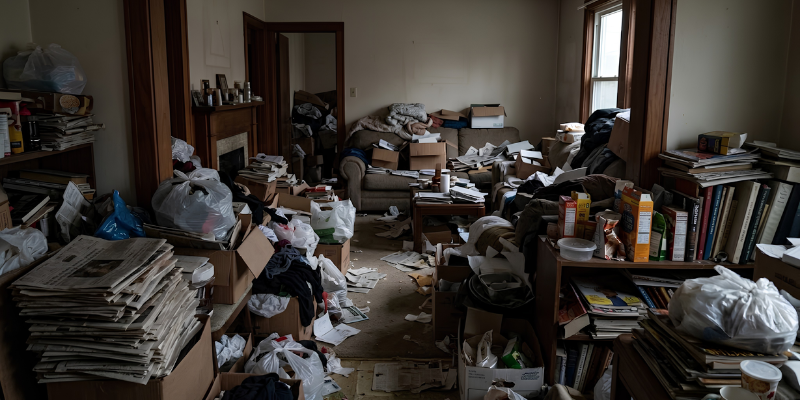
Nobody wakes up one morning and thinks, “Today’s the day I figure out what to do with a house packed floor to ceiling.” Usually, something forces the decision: a family member passes, a sibling calls, or the county sends a notice. By the time people contact me, they’ve already lost sleep over it for months.
Selling a Hoarder House in North Carolina: What Your Options Actually Cost You

North Carolina’s median home price sat at $378,655 in May 2026, and that number means something specific when a hoarder house enters the picture. A property with structural damage hidden under thirty years of accumulated belongings isn’t going to hit that median. Not even close. Sellers who understand this upfront make better decisions faster.
The median days on market across the state hit 62 days in May 2026, up 11 days year over year. This applies to a clean, move-in-ready house. A hoarder property listed on the traditional market sits longer, draws lower offers, and eats into whatever equity you thought you had. The math doesn’t lie.
Statewide inventory has since risen to 6.03 months of supply, which NC REALTORS calls a balanced market. Buyers have more choices now than they did two years ago, and they’ll skip right past a property that smells like mold or needs a hazmat crew before an inspector can even walk through. This is the reality of where this market stands right now, and hoarded or heavily distressed properties feel that pressure first.
What this means for someone selling a hoarder home: you’re competing in a market where buyers already have options, which makes presentation and pricing even more unforgiving than usual. Speed and the right sale structure matter far more than trying to squeeze the last dollar out of a traditional listing process (and that gap widens in slower markets).
What Hoarder Houses Look Like From a Buyer’s and Seller’s Perspective
Sit across from me at your kitchen table, and I’ll tell you this plainly: the hoarding itself isn’t the problem that worries buyers. It’s what the hoarding hides.
Moisture trapped under piles creates mold. Rodents and insects move into undisturbed spaces nobody checks for years. Structural damage happens quietly, with floors overloaded past what they were designed for, and nobody sees it until the stuff comes out. When a buyer’s inspector finally walks through (and they always find it), every one of those problems becomes a negotiating chip against your price.
From a seller’s side, the picture is equally complicated. You may know the house is full. What you don’t know is what’s actually wrong with it underneath everything, and I don’t either until the contents come out. I’ve bought properties where the disclosed condition was “cluttered,” and the actual condition was buckled subfloors, a collapsed ceiling in one room, and pest damage running up three interior walls (that last one is almost always worse than it looks). Every one of those issues became my problem, which is part of why cash buyers price accordingly.
A hoarder’s house isn’t just cluttered; it’s structurally and environmentally compromised in ways you can’t always see. This distinction matters whether you’re the seller trying to price the home or the buyer trying to estimate renovation costs. Mold, pests, and compromised floors are never cosmetic fixes. They require licensed contractors, proper remediation, and permits in most North Carolina counties.
Are you clear on exactly which hazards are present in your property? Sellers rarely are, and that uncertainty is precisely what makes pricing a hoarder home on the open market such a gamble.
The Emotional Weight That Comes with Selling a Family Hoarder Home
For years, I assumed people delayed selling because of the logistics. I was wrong. The delay is almost always grief.
Hoarding disorder is recognized as a mental health condition, and the belongings involved aren’t just stuff to the people who lived with them or loved the person who did. They’re a record of a life, tangled up with complicated feelings about what should have happened differently. Families sorting through a hoarder home aren’t just moving boxes; they’re making hundreds of micro-decisions about memory and meaning (every item a small negotiation), and none of those decisions come quickly.
Last year, I worked with a family whose landlord relative had passed in Cary, leaving behind a property packed with nearly three decades of belongings. Strong opinions among the siblings about what to keep turned a process of weeks into one of months. On a Saturday walkthrough, we found a box of military medals in the garage that nobody knew existed. One discovery alone paused everything for a week, which meant the closing timeline shifted entirely around one afternoon in a garage. That family wasn’t being difficult; they were grieving, and they needed room to do that alongside the practical decisions.
If you’re in that situation right now, the property can wait. A few weeks won’t sink a deal with the right buyer. What sinks sales is rushing sellers into choices they regret, and a trustworthy buyer won’t pressure you. Bright Home Offer works with families in exactly these situations across North Carolina, and our approach is built around giving sellers the time they actually need.
What a Full Cleanout Costs in North Carolina
A family in Greensboro came to me after spending two weekends trying to tackle a four-bedroom hoarder house themselves. By Sunday evening of the second weekend, they’d filled two dumpsters and hadn’t touched the back bedroom or the basement. The reality of a full professional cleanout lands right then.
A professional estate cleanout for a moderate hoarder house in North Carolina runs $3,000 to $8,000 for a Level 1 situation where every room has excess items, but you can walk through. Push into Level 2 or Level 3 territory, where pathways are narrow and biological hazards are present, and that figure climbs sharply (sometimes faster than the initial quote suggests).
Severe hoarding cases with hazmat conditions run $15,000 to $30,000 or more, requiring a full hazmat crew. And that’s before any repairs. Once the house is empty, you’ll see the damage that was hiding underneath. Budget another substantial sum for flooring replacement, drywall, plumbing repairs, possible subfloor replacement, and mold remediation behind walls. Many sellers underestimate this second wave of costs completely.
Biohazard cleanup companies in North Carolina charge $3,000 to $15,000 for a single-family home, depending on severity and square footage. Add mold remediation on top of that if the HVAC system was compromised, which it often is in homes with years of poor air circulation. North Carolina’s humidity (especially in the Piedmont summers) is not forgiving to a sealed-up house.
Total costs, cleanout plus remediation plus structural repairs, can easily exceed what you’d gain by listing on the open market. This isn’t pessimism; it’s math.
What North Carolina Sellers Need to Know About As-Is Home Sales
A seller in Winston-Salem listed a cluttered inherited property without disclosing a known roof leak, thinking “as-is” meant she didn’t have to mention it. After closing, the buyer’s attorney disagreed.
Selling as-is in North Carolina does not mean selling without disclosure. The Residential Property Disclosure Act, codified as North Carolina G.S. 47E, requires sellers of residential real estate to complete a form known formally as the Residential Property and Owners’ Association Disclosure Statement, disclosing conditions and defects with the property. That obligation exists regardless of whether you’re selling with an agent or on your own, which means a seller can’t just hand over the keys and walk away clean. The same question comes up when sellers ask whether they can sell a house as is without an inspection in North Carolina, and the answer is similar: skipping the inspection doesn’t remove the disclosure form from the process.
North Carolina follows a “caveat emptor” (buyer beware) approach, but still requires sellers to provide disclosures unless the buyer and seller mutually agree to waive them in writing. Cash buyers and investors often agree in writing to waive certain disclosure requirements, which simplifies the process considerably for sellers of distressed properties. But that waiver has to be mutual and explicit; it’s not automatic just because someone offers cash, so get it documented before you assume you’re covered.
Failure to disclose known issues can lead to serious legal consequences, including the potential for the buyer to rescind the sale or pursue damages in court. Being legally liable for something you could’ve disclosed upfront is a costly mistake that no seller needs to make. When you work with a reputable local buyer like Bright Home Offer, the process includes clear documentation of the as-is condition so both parties are protected.
The good news: As-is sales are completely normal and legal in North Carolina. Sellers aren’t required to fix anything. They’re simply required to tell the truth about what they know.
Can You List a Hoarder House on the MLS in North Carolina
Will buyers even make offers if you list as-is? In most cases, listing a hoarder property on the MLS without addressing the condition first tends to produce one result: price reductions and a property that sits until buyers assume something worse is wrong than the reality (and that assumption hardens fast).
Real estate agents earn their commission on clean, photogenic homes where buyers can visualize themselves living. A house full of accumulated belongings, with rooms that can’t be safely photographed or walked through, puts an agent in a very difficult position. Most agents will ask you to at least partially clear the property before going active on the MLS, leaving you spending money on a cleanout before you even know what the house will sell for.
There’s also a lender problem. Buyers financing with conventional mortgages need an appraisal, and appraisers need to be able to access and assess every room safely. The contents have to come out before anyone, including an inspector, can see what is wrong with the structure. If an appraiser can’t complete a full assessment, the loan doesn’t close. Financed buyers walk. You’re back to square one.
Sellers who want to try the MLS route should understand the real timeline. Add the weeks needed for a partial cleanout to the 62-day median market time, then add a standard 30-to-45-day closing period, and you’re looking at four to six months minimum before you see proceeds. That’s assuming no surprises come up during inspection, which is a big assumption with a hoarder property.
Why a Cash Sale Is Often the Right Move for Hoarder Properties
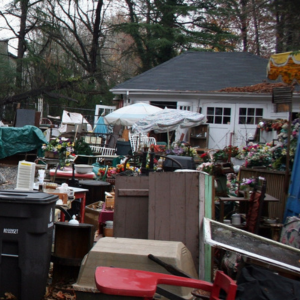
Most discussions of cash sales focus on speed, which is real. What they skip is the inspection contingency problem.
Every financed offer comes with an inspection period. Hoarder properties fail inspections at a rate that makes financed offers largely theoretical. Even buyers who enter enthusiastically often back out once the inspection report reveals pest damage, mold, or structural concerns that their lender won’t approve. You’ve spent three weeks under contract, disclosed your hopes to your family, and then you’re starting over.
Cash buyers break that cycle completely. With no lender, no appraisal, and no inspector with a 40-page report that kills the sale on page 7, a serious cash buyer walks through the property, prices in the repair costs themselves, and makes an offer based on what the house is actually worth in its current state. The offer may be lower than a post-renovation listing price, but there’s no renovation cost coming out of your pocket either.
Bright Home Offer buys hoarder properties across North Carolina in exactly this way, including properties with mold, pest issues, structural concerns, and full contents still inside. The seller takes what matters, leaves what doesn’t, and receives a cash offer without funding a single dumpster run first.
One thing that catches sellers off guard: cash buyers can also close on your timeline, not theirs. Two weeks or two months, the flexibility is real and useful when families need time to sort belongings.
How North Carolina Cash Buyers Handle Hoarder Houses
A seller who has never worked with a cash buyer tends to expect the offer to come in absurdly low, like a fraction of the home’s actual value. That expectation comes from bad actors who do exist in this industry, but it doesn’t describe how serious local buyers operate.
Reputable cash buyers build their offer on a simple formula: estimated after-repair value minus repair costs minus their operating margin. Repair costs on a hoarder’s house are high, so the offer will reflect that. But the formula is transparent, and a good buyer will walk you through it. I’ve seen sellers decline a cash offer, spend months on a cleanout and partial renovation, list on the MLS, accept a financed offer, and net less than the original cash offer after all costs were totaled (carrying costs alone eat into that gap). That outcome happens more often than sellers expect.
One situation stays with me. A landlord in Kannapolis was three months behind on the mortgage, with a foreclosure auction date already scheduled. The property had been tenant-occupied for years, and the garage alone was packed with furniture, old appliances, and tools the tenant had left behind on a Tuesday when they stopped returning calls. We moved quickly; the sale closed before the auction date, and the landlord avoided the credit damage that foreclosure would have caused. Speed in that case wasn’t a luxury; it was the difference between a clean exit and a financial wound that takes years to recover from.
North Carolina cash buyers who work regularly with hoarder properties know how to price mold remediation, subfloor replacement, and pest treatment into their offers without theatrics or pressure tactics. The process is straightforward: you request an offer, a buyer tours the property (sometimes just once), an offer is presented, and you decide with no obligation either way. It runs the same whether you are searching for cash home buyers in Cary or anywhere else in the state.
Frequently Asked Questions
How Do You Sell a Hoarder Home?
Your clearest path is deciding first whether to clean out the property or sell it as-is. A full cleanout followed by an MLS listing can work, but the costs often eat most of the upside. Selling directly to a cash buyer skips the cleanout entirely; the buyer takes the property in its current condition, contents and all, if that’s what you need. Either way, you’ll still complete North Carolina’s required disclosure form describing what you know, unless you and the buyer agree in writing to skip it.
Is There a Hoarder Mansion in North Carolina?
North Carolina has seen its share of high-profile hoarder properties, though specific estates aren’t publicly cataloged in any official registry. Hoarding disorder affects people across all income levels, and large properties can accumulate just as much as small ones, sometimes more, because there’s more space to fill. If you’ve inherited or own a larger property in this condition, the same options apply: cleanout, as-is sale, or a combination of both.
Can I Sell My House Without a Realtor in North Carolina?
Yes. North Carolina law doesn’t require you to use a real estate agent to sell residential property. You’ll still need to complete the state’s Residential Property and Owners’ Association Disclosure Statement and handle the closing through a licensed real estate attorney, which is standard practice in North Carolina, regardless of how the sale is structured. Many sellers of hoarder properties choose to sell directly to a cash buyer without an agent, which also eliminates the commission cost.
What Should I Avoid Doing Before Selling My House?
Don’t spend money on repairs or cosmetic improvements before you know your buyer’s expectations. On a hoarder property especially, investing in updates that a cash buyer will redo anyway just reduces your net proceeds. Also, don’t throw away or discard anything from the property without verifying it has no value; families frequently find meaningful items or financial documents buried in the accumulation. Get an offer first, then decide what to remove and what to leave behind.
If you’re sitting with a hoarder property in North Carolina right now and not sure what your next move is, we’re here to talk it through. No pressure, no obligation, no judgment about the condition of the house. Reach out to Bright Home Offer whenever you’re ready, and we’ll give you a straight answer about what your options look like.
Helpful North Carolina Blog Articles
- Selling A House During Divorce In North Carolina
- Do Sellers Pay Closing Costs In North Carolina
- Selling A Hoarder House In North Carolina
- Selling A Probate House In North Carolina
- How To Sell Your House In Foreclosure In North Carolina
- Can You Sell A House As Is Without An Inspection In North Carolina
- How to Sell a House with Foundation Issues in North Carolina
- How to Sell a Fire Damaged House in North Carolina
- How to Sell a House Without a Realtor in North Carolina
- How to Sell a Condemned House in North Carolina
- Sell House With Water Damage in North Carolina
- Selling Tenant Occupied Property in North Carolina
- Do i Need a Lawyer to Add a Name to a Deed
- Can you Sell a House with a Mortgage in North Carolina
- Documents Required for Selling Inherited Property in North Carolina
- Can I Sell my House and Still Live in it