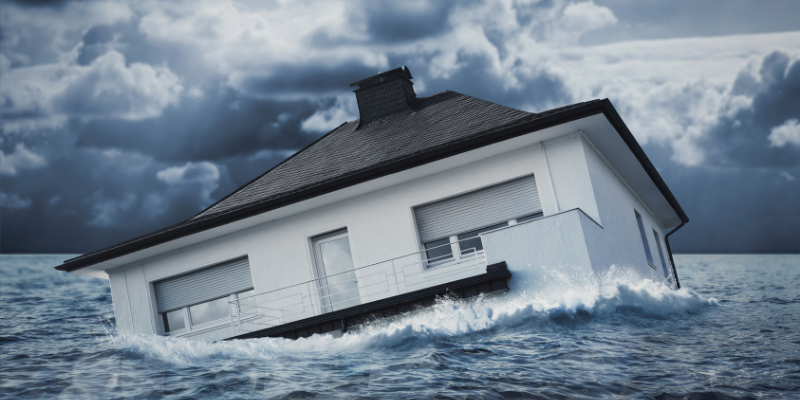
Water finds a way in. Sometimes it’s Hurricane Helene tearing through the western mountains. Other times it’s a pipe that burst behind the washing machine in a Greensboro ranch house or years of slow seepage into a crawl space in Garner that nobody caught until the subfloor sagged. Either way, you’re holding a property with a problem and trying to figure out your real options. This is what selling a water-damaged house in North Carolina actually looks like.
Selling a Water-Damaged Home in NC: What You Actually Need to Know
Most homeowners who call me at Bright Home Offer about water damage are already worn out before we start talking. One contractor’s estimate left them feeling sick. A fight with the insurance adjuster left them frustrated. They’ve Googled enough to know that selling as-is is an option, but not enough to know if it’s the right one for their property.
In June 2026, the median sale price for homes in North Carolina was $383,799, up 1.0% compared to the previous year. Real value still sits in this market, and a water-damaged property can still sell in it, just not the way most agents will tell you. Your path forward depends on the type of damage, your timeline, and honestly, how much energy you’ve got left for this house.
A few years back I worked with a family in Fuquay-Varina who’d inherited a rental property from a parent. The crawl space had flooded twice. Hardwood floors buckled in two rooms, and mold crept along the base of the interior walls. Three years of running the home as a rental had left them done, completely done. Their garage was still packed with the parents’ belongings, and they lived two hours away. We closed in about three weeks. No repairs, no showings, no open houses. More sellers can reach that outcome than realize it.
What Types of Water Damage Affect NC Homes the Most?
Not all water damage is the same, and the type matters more than the square footage affected. I’ll tell you that straight, the way I would at your kitchen table.
North Carolina throws a lot at its housing stock. Coastal communities from Wilmington to the Outer Banks face storm surge and hurricane floodwaters. Piedmont Triad neighborhoods built before 1980 see plenty of plumbing failures, especially where galvanized pipes are still in service. Asheville and the mountain towns contend with drainage failures and roof leaks from heavy ice and snow loads. Down in the Sandhills and the Cape Fear corridor, homes in Fayetteville, Hope Mills, Raeford, and Sanford sit close to rivers, creeks, and low-lying drainage. One heavy storm season can put water where it’s never been. Helene’s flooding in Buncombe County reminded the whole state that inland properties aren’t safe either.
From a buyer’s and an appraiser’s angle, water damage falls into three categories.
| Water Category | Where It Comes From | What It Means for Your Sale |
|---|---|---|
| Clean water | Supply lines, burst pipes, water heaters | Least serious of the three, though it still ruins floors, drywall, and subfloors fast. |
| Gray water | Dishwashers, washing machines, sinks, tubs | Mild contamination, so the space needs sanitizing on top of drying. |
| Black water | Sewage backups, storm surge, river flooding | Most serious, requiring full remediation before any inhabited space is safe. |
Mold can start growing within 24 to 48 hours of moisture exposure, whatever the source. So the category of damage matters less than how fast it got addressed.
Roof leaks left alone are especially sneaky in NC’s humid climate. Moisture trapped in attic insulation and roof decking feeds mold colonies that spread into wall cavities long before a stain shows on the ceiling. Plenty of sellers I talk to had no idea the problem existed until a home inspector flagged it.
What Should NC Homeowners Do Immediately After Water Damage?
This section still matters even if you’re selling as-is. The first few days after water damage shape your legal standing, your insurance claim, and how far a buyer discounts the property.
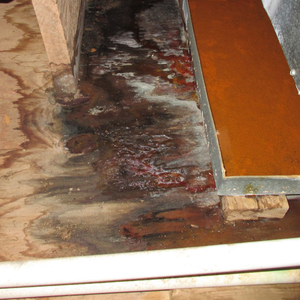
Your first move is documentation. Photograph and video everything before any cleanup or repair starts. Timestamp the photos. Save every text, voicemail, and email from contractors and your insurer.
When the adjuster visits, hand over:
- Timestamped photos and a video walkthrough of every affected room
- The restoration company’s initial scope of work
- A list of damaged contents with the dates you bought them
- Every receipt you’ve collected so far
What you don’t document, you can’t recover.
Most standard homeowner policies in North Carolina cover sudden, accidental water damage from internal sources like burst pipes. They don’t cover flooding from outside the home or damage from long-term neglect. That line matters a lot at claim time. If your damage came from a hurricane or rising creek water, you’re looking at flood insurance through the National Flood Insurance Program, not your standard policy.
Mitigation comes next, even if you plan to sell the property without repairs. Stopping the moisture source, opening windows, running fans, and pulling up water-soaked carpet shows good faith and slows mold. Buyers and their inspectors can tell a seller who tried from one who just walked away. Adjusters usually produce a scope and estimate one to two weeks after the visit. Get that document in hand before you decide anything about selling.
What Are Your Legal Disclosure Obligations When Selling a Water-Damaged Home in NC?
Skip or fudge this part, and you can land in a Wake County or Mecklenburg County courtroom years after you thought the sale was behind you.
In North Carolina, sellers have to disclose known material defects. That covers water issues, structural problems, mechanical system conditions, environmental hazards, pest infestations, and HOA information. If you’re selling a house with termites, disclose any known infestation and related damage, especially if termites have affected the home’s wooden framing, floors, or other structural components. The duty lives in the North Carolina Residential Property Disclosure Act, codified under N.C. Gen. Stat. § 47E, which requires sellers to fill out the Residential Property and Owners’ Association Disclosure Statement before a buyer makes an offer.
North Carolina’s Real Estate Commission also finalized a rule that makes sellers share flood history and risk before someone buys. It added flood-specific questions to the disclosure form, so sellers now report more detail than they used to. You’ll be asked about property damage from flooding, whether you’ve ever filed a flood claim with any insurer, and whether a flood insurance policy currently covers the home.
Painting over water stains and answering “No” is the fastest road to a lawsuit. Cash buyers like Bright Home Offer buy with full knowledge of a property’s condition, so there’s no reason to hide anything. North Carolina lets buyers sue for material misrepresentation on the disclosure statement, with remedies that include actual damages, rescission, and attorney’s fees.
Does Homeowners Insurance Cover Water Damage When You Sell in NC?
A seller once called me about a house in Cary where the insurer had already paid out for a burst pipe two years earlier. Repairs were done, the claim was closed, and she figured the sale would be clean. Her buyer’s insurer pulled a CLUE report, saw the claim history, and quoted her buyer an insurance premium that nearly killed the sale, even though the pipe had been fully fixed and reinspected.
Claim history can haunt a sale here. A water damage claim shows up in reports like the CLUE (Comprehensive Loss Underwriting Exchange). That makes buyers wary, pushes their homeowners’ insurance premiums higher, and drags on the property’s appeal. The part most sellers miss: that claim history follows the address, not just the current owner.
Read your homeowners policy closely. Under North Carolina policies, sudden and accidental discharge from a plumbing, heating, or AC system is usually covered, while coverage for continuous or repeated seepage depends on your specific terms. Water backup and sump overflow protection is generally sold as an endorsement for up to $25,000. Check your declarations page before you count on being covered.
If an external flood caused your damage and you carried an NFIP policy, that claim sits in federal records. Buyers doing their homework will find it. Put it on the form, answer honestly, and let the price reflect reality instead of a fantasy.
How Much Does Water Damage Repair Cost in North Carolina?
One cost contractors rarely name upfront is scope expansion. A drywall estimate turns into a subfloor tear-out the moment they pull the flooring back and find moisture that’s been sitting against the joists for months.

Water damage restoration in North Carolina runs homeowners between $1,300 and $5,400, though the number moves with the water category, affected area, and how fast the damage got handled. Raleigh often runs well above that statewide range. The average water damage restoration cost in Raleigh is $8,407, with most projects landing between $1,935 and $14,880.
Mold remediation gets billed separately from water damage restoration, and it can add thousands. Once moisture reaches the subfloor or structural members, you’re into tear-out and rebuild costs on top of drying and mold treatment. Full crawl space restorations in older homes around Burlington or Rocky Mount, where pier-and-beam construction is common, can run well past the mid-range numbers.
Mecklenburg County and some nearby towns require permits for structural repairs over certain thresholds. Permit fees run from $100 to $500 and add time to the job. That time hurts if you’re already paying a mortgage on a house you can’t live in or rent out.
Sellers often ask if they should repair before listing. My answer is to run the math honestly. If repairs cost $40,000 and you’d get $35,000 of that back in the list price, you’re better off selling as-is and letting a buyer or investor absorb the work. Repairing to sell only pays when the return is clearly positive.
Why Water Damage Kills Conventional Home Sales in NC
Even after the repairs are finished, the paper trail causes trouble. Lenders get cold feet.
For government-backed financing like FHA or VA loans, lenders can require that water problems be fixed before they approve anything. A big slice of the buyer pool simply can’t buy a water-damaged property at any price. Those buyers get screened out at underwriting, not at the offer stage. You can lose a sale three weeks in after turning down other offers.
North Carolina’s median days on market hit 65 days in June 2026, up 14 days from a year earlier. A water-damaged property tends to sit longer than that. The inspector flags the damage, the buyer’s lender balks, and the sale falls apart. Then the home carries a failed sale in its history, and the next buyer gets even more cautious.
Unresolved moisture also drags down appraisals. On a median-priced North Carolina home, the value hit usually lands somewhere between $19,000 and $77,000, depending on how bad it is and how far it spread. That’s before repair costs or the carrying costs of a long listing. Sellers who go the traditional route often accept a discounted price anyway, only after months on the market.
How to Price a Water-Damaged Home in North Carolina’s Market?
Pricing a flooded house, or one with mold in the crawl space, comes down to a few honest costs.
Start with what the home would be worth in good condition. Pull recent sales in your zip code for similar square footage and lot size. Around the Triangle near Raleigh and Durham, or up the fast-growing Lake Norman corridor north of Charlotte, you can find plenty of comps. In a smaller market like Raeford, the edges of Sanford, or out in rural Sampson and Robeson counties, comparable sales thin out and pricing turns into a judgment call. If you’re weighing a Triangle listing specifically, start with what a direct buyer would pay to sell your house fast in Durham, NC, before you set a list price.
From that good-condition value, subtract the realistic cost to remediate the damage and get the property sell-ready. Then subtract a buyer’s risk premium, roughly 10% to 15% of the good-condition value on top of repairs, because anyone taking on a damaged property wants to be paid for the unknowns they’re absorbing.
Overpricing a water-damaged home is the single most common mistake I see. Sellers anchor on what the house would fetch if the damage had never happened, list it there with a vague “needs work,” and then watch it sit. The longer it sits, the more buyers wonder what’s really wrong. A sharp, accurate price on day one moves faster and nets more for the seller than a dream price that needs three cuts over four months.
Bright Home Offer can hand you a no-obligation cash offer on a water-damaged property that factors in real remediation costs. Even if you list traditionally, it’s a useful benchmark for where the floor sits.
Can You Sell a House with Water Damage to a Cash Buyer in NC?

A man in Kannapolis called on a Tuesday afternoon. He was splitting assets with his ex-spouse and needed the house gone. Their attached garage was packed with both their belongings, neither of them wanted to handle the cleanout, and the basement had flooded twice after heavy rain. He wasn’t after advice or a long process, just a number and a close date, so the whole call ran under fifteen minutes.
That’s the situation where a direct cash sale fits best. Cash home buyers in North Carolina, including real estate investors and companies like Bright Home Offer, buy properties in their current condition. No repairs required. A home inspection contingency won’t hand a buyer an excuse to renegotiate. And no lender decides two weeks before closing that the subfloor moisture readings are a sale breaker.
A buyer walks the property, sizes up the damage, and puts an offer in writing based on the property’s as-is condition and what it’ll take to bring the home back. Accept it, and you close within two to four weeks. You pick the date. You leave the property as messy as you like.
Cash sales also skip the appraisal entirely. In a market where lenders already treat a water-damaged property as risky collateral, cutting the appraisal contingency speeds everything up and removes one of the most common ways a traditional sale falls apart.
That holds wherever you are in the state. Sellers looking for cash home buyers in Raleigh, NC, get the same treatment as someone trying to sell a house fast in Fayetteville, NC, water damage and all.
How Do Cash Buyers Determine What to Pay for Water-Damaged Homes in NC?
People assume cash buyers lowball every offer. That assumption falls apart in the math of the alternative.
Cash buyers build an offer around the property’s repaired value, called after-repair value, minus the repairs and their margin for holding and reselling the property after rehab. The offer reflects real numbers, not random discounts. A buyer who lowballs the repair estimate loses money, so they’ve got every reason to get it right.
The type and extent of the water damage drives the final number the most. A house with a documented burst pipe caught fast and dried professionally earns a stronger offer than a property with years of hidden seepage and active mold in the wall cavities. All that documentation you gathered early gives the buyer confidence in what they’re pricing: the contractor reports, the adjuster’s scope, and the photos.
Carrying costs matter too. Six months of rehab means the buyer keeps paying property taxes, insurance, and sometimes HOA fees, which shrinks what they can offer at acquisition. Sellers who grasp this negotiate better.
Homes across North Carolina sold for about 97.7% of list price in June 2026. For a water-damaged property, that near-list pricing disappears fast. A cash buyer closes at the agreed price with no post-inspection renegotiation, so the number you shake on at closing is the number you keep. That certainty carries real dollar value that a plain cash-offer-versus-list-price comparison never captures.
Frequently Asked Questions
How Long Are You Liable for a House After You Sell It in North Carolina?
Your liability after closing turns on what you disclosed, not on when you sold. Fill out the Residential Property and Owners’ Association Disclosure Statement accurately, give your buyer a fair chance to inspect, and your exposure stays limited. The risk comes from hiding known problems, since buyers can sue over material misrepresentation on the statement. Worried about past repairs or something you didn’t disclose? Talk to a North Carolina real estate attorney.
Do Home Sellers Have to Disclose Water Damage in North Carolina?
If you know about it, yes. Water intrusion, flooding, standing water, drainage trouble, crawl space moisture, and past water damage sit among the most litigated categories in NC disclosures. The current disclosure form also carries flood-risk and flood-history questions. Answering falsely, or covering up a problem you know about, is what creates liability. Selling as-is to a cash buyer doesn’t get you out of disclosing. It just means you’re skipping repairs before closing.
How Much Does Water Damage Decrease Home Value?
Water damage can cut a property’s value by an estimated 5% to 20%, depending on how severe and widespread it is. The hit runs deeper when the problem is active at sale time, or the repairs look unfinished. On top of the appraised drop, sellers usually face longer days on the market, more buyer leverage, and the chance a lender demands repairs before it’ll finance. Pricing accurately from the start is your best tool for keeping the net loss small.
Do You Have to Pay Capital Gains When You Sell Your House in North Carolina?
Most people selling a primary residence owe no state tax on the sale at all. If the gain is excluded federally under the IRS Section 121 exclusion, North Carolina excludes it too. You only owe NC tax on the portion above the federal exclusion. Most sellers with gains under $250,000 single or $500,000 married owe no state tax on the sale. Above those thresholds, North Carolina applies its flat income tax, capital gains included, currently 3.99%. If your situation’s complicated, talk to a CPA before closing.
Do you have a water-damaged property in North Carolina and want to talk through what selling it really looks like? Reach out to Bright Home Offer. No repair requirements, no drawn-out haggling, no pressure to take any offer you’re not comfortable with. Just an honest conversation about your property and your options.
Helpful North Carolina Blog Articles
- Selling A House During Divorce In North Carolina
- Do Sellers Pay Closing Costs In North Carolina
- Selling A Hoarder House In North Carolina
- Selling A Probate House In North Carolina
- How To Sell Your House In Foreclosure In North Carolina
- Can You Sell A House As Is Without An Inspection In North Carolina
- How to Sell a House with Foundation Issues in North Carolina
- How to Sell a Fire Damaged House in North Carolina
- How to Sell a House Without a Realtor in North Carolina
- How to Sell a Condemned House in North Carolina
- Sell House With Water Damage in North Carolina
- Selling Tenant Occupied Property in North Carolina
- Do i Need a Lawyer to Add a Name to a Deed
- Can you Sell a House with a Mortgage in North Carolina
- Documents Required for Selling Inherited Property in North Carolina
- Can I Sell my House and Still Live in it